

University of Mary launches Civic Leaders Fellowship at Arizona State University
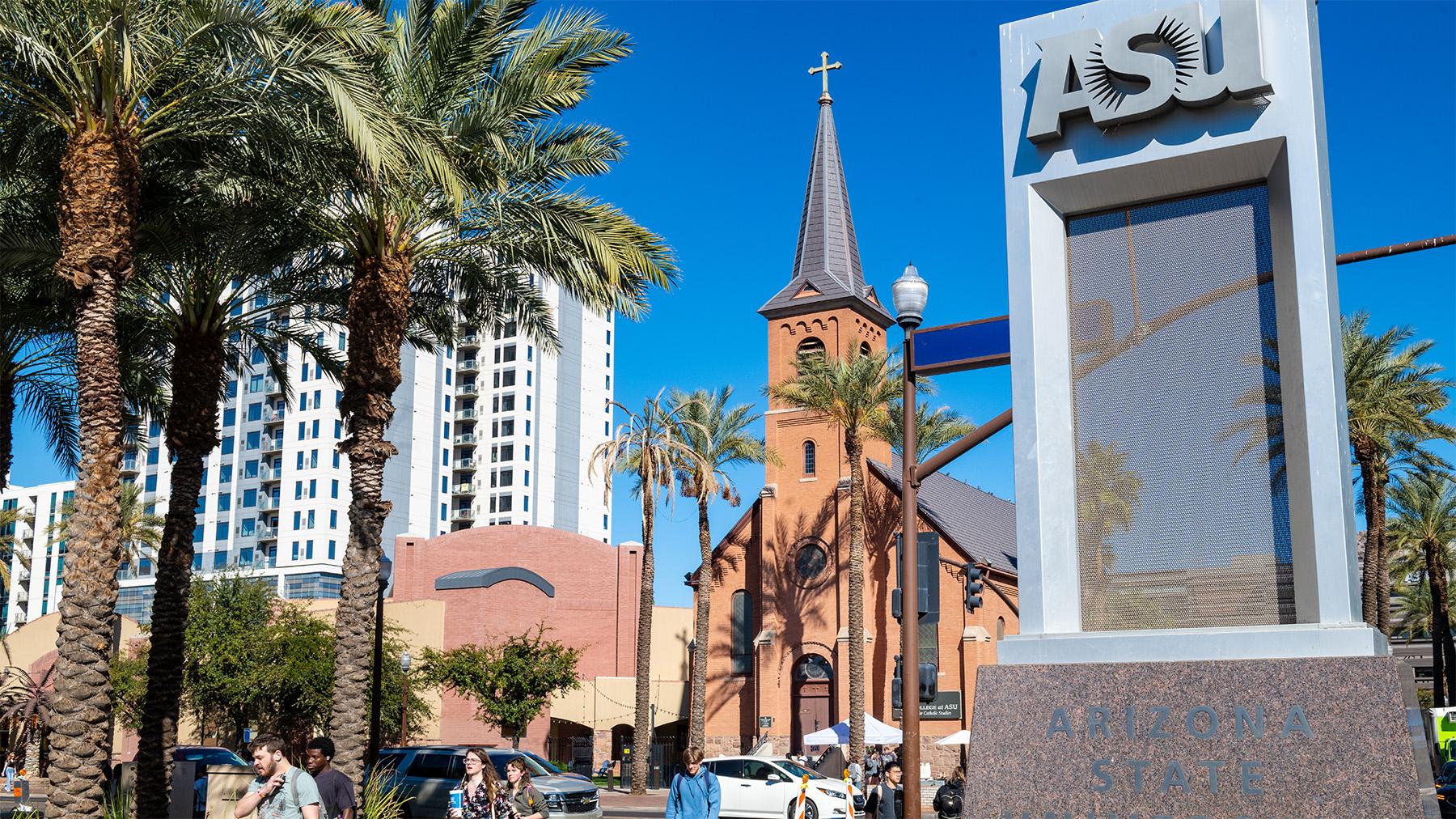
New program leverages partnership with ASU’s School of Civic and Economic Thought and Leadership to form next generation of servant leaders
BISMARCK, N.D. — The University of Mary is expanding its growing academic presence in the Phoenix area with the launch of the Civic Leaders Fellowship, a new opportunity for students studying at Mary College at ASU to engage deeply in civic, economic, and philosophical thought while advancing their degrees.
The fellowship partners with School of Civic and Economic Thought and Leadership (SCETL) at Arizona State University, a nationally recognized program dedicated to exploring the ideas that shape society and the common good.
“Since 2019, University of Mary students have had the opportunity to spend an exchange semester at Arizona State University, one of the largest universities in the nation,” said Scott Lefor, program director for Mary College at ASU. “Throughout the semester, Mary College at ASU — the University of Mary’s campus in Tempe — serves as students’ home base.”
Lefor said the Civic Leaders Fellowship emerged organically after years of observing the impact SCETL had on participating students.
“In speaking with students, we’ve found that the School of Civic and Economic Thought and Leadership consistently plays a positive role in their lives,” Lefor said. “The Civic Leaders Fellowship is meant to assist Mary students in expanding their educational, professional, and human development by utilizing some of the best of ASU’s offerings.”
During their semester in Arizona, fellows complete at least six credits of SCETL coursework, attend public lectures and debates, and reflect on their experiences — all while continuing to make progress toward their University of Mary degrees.
To ensure the fellowship integrates seamlessly into students’ academic paths, the University of Mary has developed detailed advising guides showing how SCETL courses can fulfill major and minor requirements — particularly in philosophy, politics, business, and economics.
SCETL’s interdisciplinary curriculum includes courses and events focused on topics such as the U.S. Constitution, economic systems, and modern political discourse. Lefor noted the alignment between SCETL and the University of Mary’s mission.
“SCETL’s curriculum and educational vision resonate with that of the University of Mary,” he said. “They take an integrated approach to education, seeking to form students as persons while preparing them for success in a wide range of professions.”
Beyond academics, students are immersed in the vibrant life of the Phoenix metropolitan area — known as the Valley of the Sun — while remaining grounded in a strong Catholic community through Mary College at ASU and the local Newman Center.
“Opportunities like this can change the trajectory of students’ lives,” he said. “The unique challenges and joys that come with moving to a new place and learning a new way of doing things can expand who we are as students, professionals, and persons.”
Applications are now open for the Fall 2026 semester. Students can simply apply through the University of Mary’s Global Studies Office by calling (701) 355-8010 or by visiting the Civic Leaders Fellowship webpage.
The Civic Leaders Fellowship also builds on the University of Mary’s broader and rapidly expanding presence in Phoenix. In addition to Mary College at ASU, most recently, the university announced the new Photina Center for Catholic Counseling, in partnership with the Diocese of Phoenix’s Office of Mental Health Ministry, an initiative dedicated to forming clinically trained, faith-filled mental health professionals to serve the Church and the wider community. The university has also expanded its presence by launching a graduate school of theology in Arizona to serve Nazareth Seminary, the Diocese of Phoenix’s new seminary for the formation of future priests. Together, these initiatives reflect the university’s commitment to bringing its Christian, Catholic, and Benedictine mission to one of the fastest-growing regions in the country.
Explore Topics
