

University of Mary launches online Early Childhood Education degree to address critical workforce shortages across North Dakota and beyond
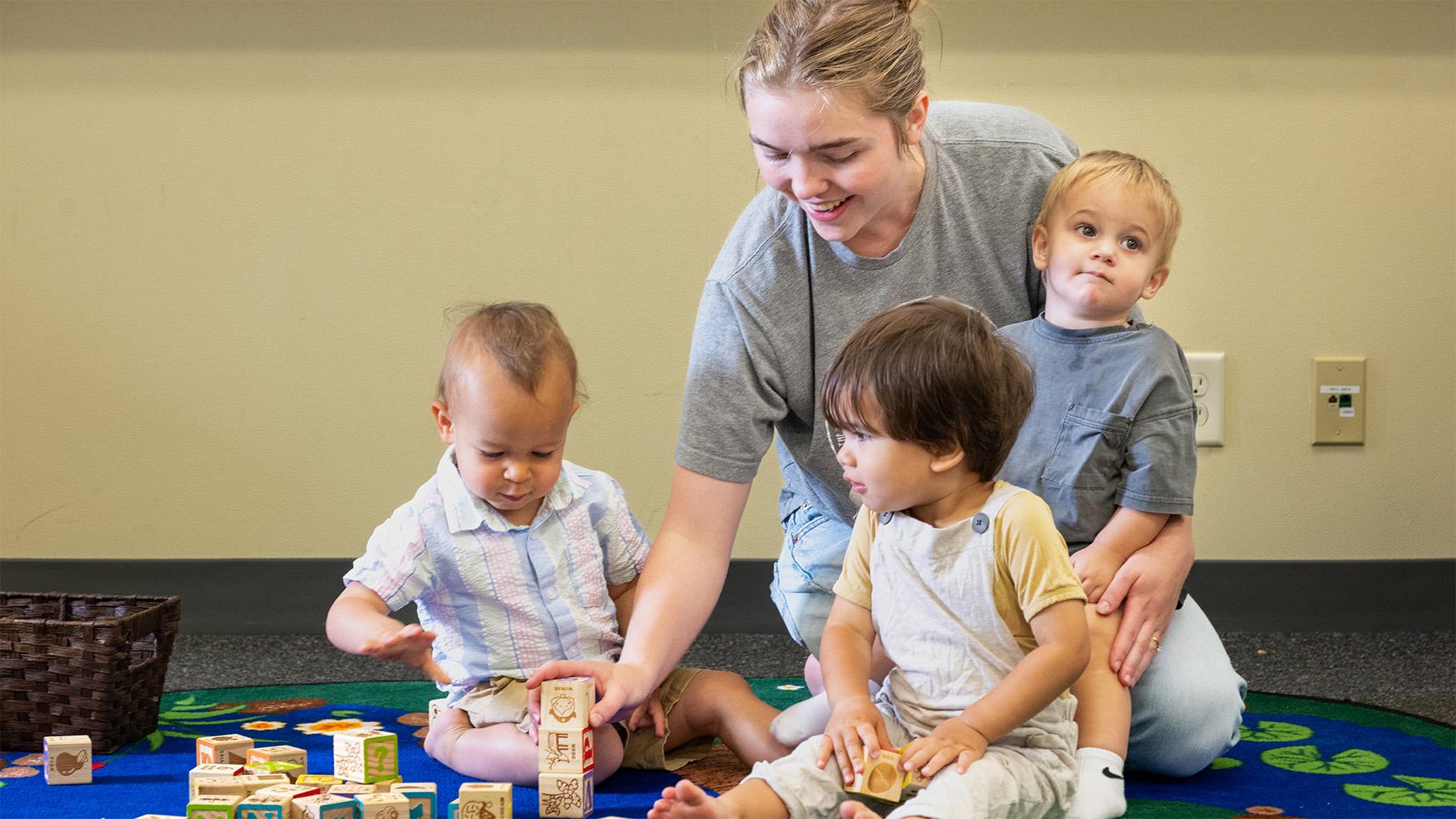
New licensure-eligible program allows students to remain in their hometowns while preparing to lead classrooms, childcare centers, and early learning programs where the need is greatest
BISMARCK, N.D. — The University of Mary is expanding its mission-driven outreach across North Dakota and the surrounding region with the launch of a new online Bachelor of Science in Early Childhood Education — a licensure-eligible program offered through the Liffrig Family School of Education and Behavioral Sciences and designed to help address the growing shortage of qualified early childhood educators while allowing students to remain in their own communities.
The new online degree mirrors the university’s established on-campus program and prepares graduates to teach and lead in classrooms and childcare settings serving children from birth through age eight.
“This online program stands out because it combines licensure preparation with Christian, Catholic, and Benedictine values,” said Tina Ding, assistant professor and director of Early Childhood Education and Child Development Studies at the University of Mary. “Students don’t have to leave their families, their communities, or their jobs to earn a fully licensure-eligible degree. That is especially important in rural North Dakota and underserved communities where workforce shortages continue to grow.”
Addressing a Critical Workforce Need
The launch comes at a critical time for North Dakota communities struggling to meet childcare and early education demands. According to state data, Burleigh County currently meets only 21% of the demand for licensed childcare, while Morton County meets just 13%. Statewide, more than 70% of children under age six have all available parents participating in the workforce, yet access to quality early learning opportunities remains scarce.
“With fewer trained professionals in the field, childcare centers are impacted by staffing shortages, which limits enrollment opportunities for families,” Ding said. “When parents cannot access childcare, it impacts their ability to enter or remain in the workforce. Trained professionals in early childhood education are essential not only for children’s development, but for the health and stability of entire communities.”
Keeping Students in Their Communities
Designed specifically for working adults, paraprofessionals, childcare workers, and rural residents, the online program allows students to continue working while completing coursework, supervised field experiences, practicums, and student teaching placements within their local communities.
Recent graduate Autumn Schoenrock of Royalton, MN., who earned bachelor’s degrees in elementary education and early childhood education from the University of Mary, believes the flexibility offered through online coursework can help students balance their education with existing responsibilities and community commitments.
“An online program is the perfect opportunity for an individual to earn their degree while staying connected to their current community,” Schoenrock said. “The University of Mary prepared me to organize and lead any classroom with ease and confidence.” This fall, Schoenrock will spend the coming year teaching high school students during a mission assignment in Belize.
Likewise, Sarah Helmuth of Lambert, MT., a graduate of the university’s early childhood education program and now a kindergarten teacher at Underwood Public School in North Dakota, has witnessed firsthand the need for qualified educators and childcare services in rural communities.
“I have seen co-workers begin searching for childcare before their babies are even born because openings are so limited,” Helmuth said. “Childcare is something that is very much needed everywhere, but especially in small towns and remote areas.”
Online students complete the same curriculum as students enrolled in the university’s traditional in-person program, including coursework in child development, curriculum design, classroom management, assessment, methods instruction, and family engagement. Graduates are eligible for the North Dakota Educator’s Professional License for birth through age eight.
Hands-On Learning with a Mission-Driven Focus
The program also integrates extensive hands-on learning opportunities to students in the Bismarck-Mandan area through the university’s Butler Center for Early Learning, a licensed childcare learning environment serving infants through early childhood ages.
“The Butler Center allows students to bring theory into practice,” Ding said. “Students gain opportunities to observe classrooms, complete assessments, participate in practicums, and engage directly with children and families in real-world educational settings.”
In addition to preparing graduates for classroom teaching positions, the new online degree opens pathways into leadership and support roles across the early childhood field, including preschool administration, Head Start programming, early intervention services, family support, and educational coaching.
“The University of Mary mission uniquely blends Benedictine values with flexible online learning designed for working adults and rural residents,” Ding added. “Our graduates are prepared to create classrooms and learning environments that are academically strong, relationally centered, and focused on the dignity of every child.”
Prospective students are encouraged to apply as soon as possible for the first online Bachelor of Science in Early Childhood Education cohort, which begins Sept. 7, 2026.
Explore Topics
