

Personal Care, Global Scale
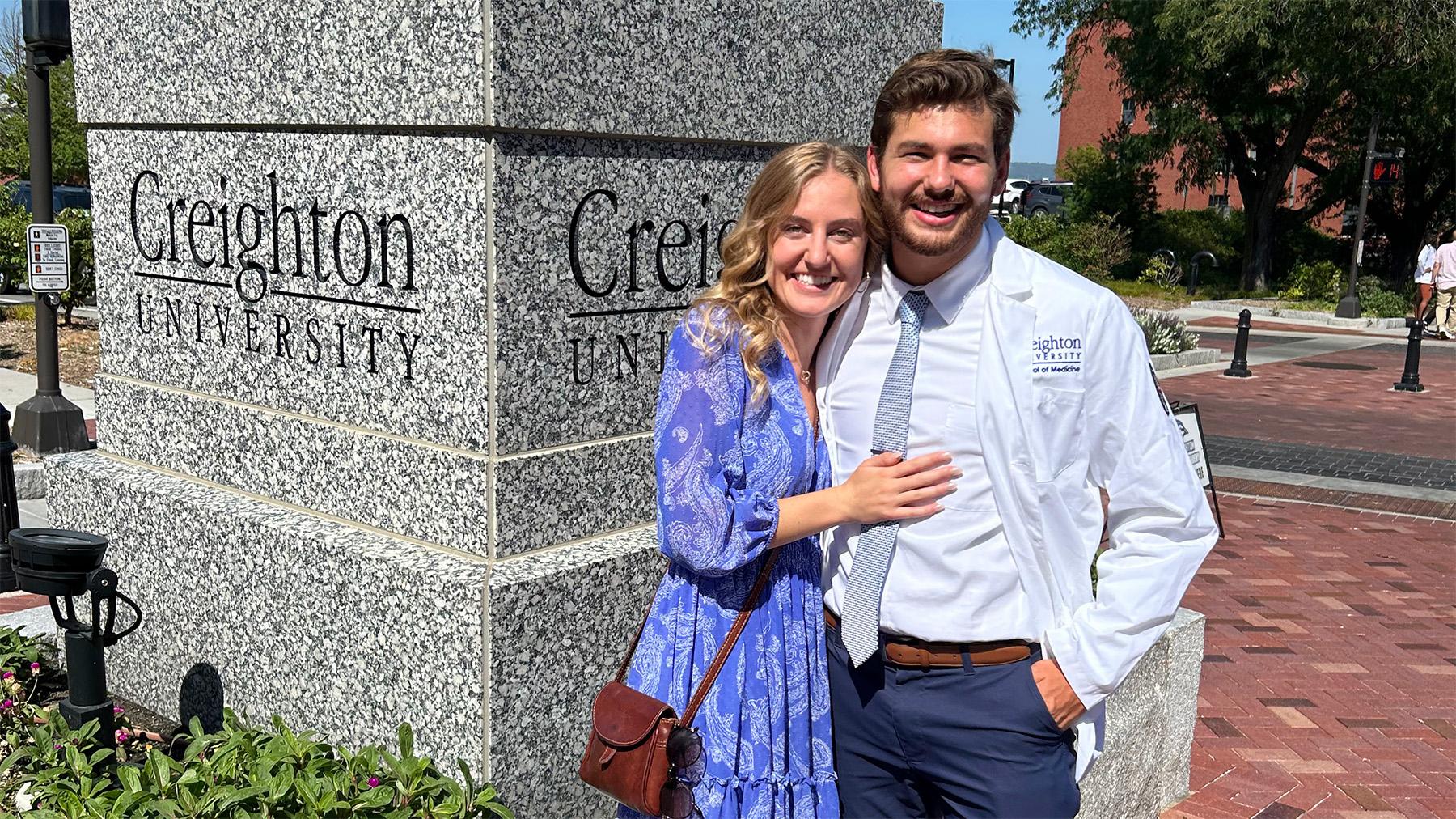
Dominic Regli
Class of 2024
Dominic Regli seeks to bring Christ’s healing hands to rural Rwanda
When Dominic Regli, ’24, arrived at the University of Mary, he had his life figured out: He was going to be a physician. He grew up on a dairy farm in northern California, but bovine medicine didn’t attract him. Instead, interactions with local doctors led him to pursue a life in health care — and he came to campus with a career-readiness checklist to complete. Then he took his first philosophy class.
“I was mad at first: I couldn’t understand why I had to be there,” Regli says with a laugh. “A professor told me, ‘If you don’t study philosophy, then you’ll always be living out someone else’s truth and never actually thinking for yourself.’”
Transaction to Transformation
Soon, Regli felt his mind opening to something more than the transactional experience he initially desired. In every subject, including the biology courses required for med school, he began to connect his faith with his career plans. All of his faculty were ready to engage in philosophical discussion, and he found himself confronted daily with questions of purpose.
“It would blow my mind when my mathematics or physics professors would talk about a particular concept and then show how God used the same concept when creating the universe,” he says. “They could tell when I wasn’t thinking properly and needed to consider the bigger reasons behind why I was pursuing a life in medicine.”
Monsignor James Shea’s perennial message to students also transformed Regli’s thinking.
“He always emphasized that our lives are not about us. I finally realized that he was right. I stopped trying to make everything fit my own agenda and let God be in control,” Regli says. “Even now as a medical student, I tell myself: My life’s work is an act of service — to serve God and those around me.”
Global Health, Rural Focus
This shift in perspective has been foundational for his formation as a future doctor: “The community at Mary really helped me find my calling. It helped ground me in prayer and my relationship with God and did a great job preparing me for medical school.”
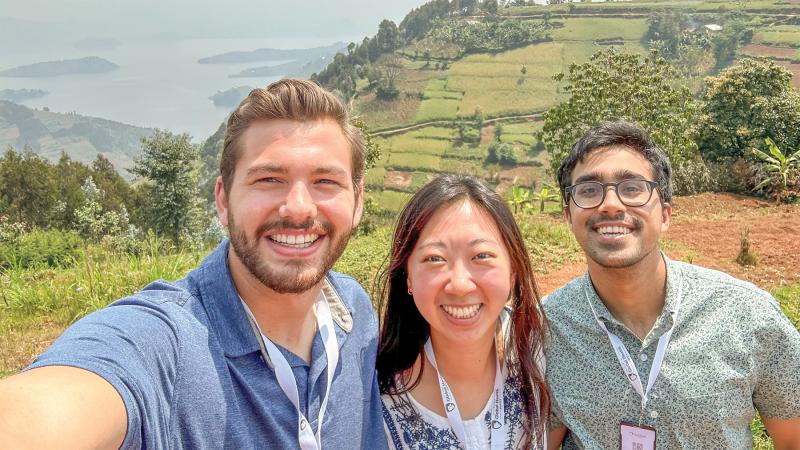
Now in his second year at the Creighton University School of Medicine, Regli’s focus has expanded to global and rural health. Last summer he traveled to Rwanda to meet other scholars and members of global health organizations. He worked closely with students of various backgrounds, including a group from Harvard Medical School. As a Jesuit institution, Creighton’s medical program is well-rooted in Catholic social teaching and blends seamlessly with Mary’s emphasis on human dignity. Regli treasures the memories of lively debates with his colleagues about ethics, morality, and dignity that often stretched into the early hours of the morning.
His experience in Rwanda was so impactful that he is returning next fall. He will spend a year at the University of Global Health Equity pursuing his master’s degree in public health while conducting research in global and rural health care — specifically, surgery delivery in rural areas and how long it takes people with medical conditions to come to the clinic. At the same time, Regli will research surgery delivery in rural Nebraska and how robotics-assisted techniques can positively impact rural hospitals.
Christ in the Patient
Following his year in Rwanda, Regli plans to return to Omaha to complete his last two years of medical school, followed by a residency in general surgery with a global and rural surgery concentration. Afterward, he and his wife Mary (Gutenkauf) Regli, ’23 — an English major turned TV journalist he met at the University of Mary — plan to live abroad, splitting their time between sub-Saharan Africa and the rural US.
“We both want to serve rural and underserved populations that have poor access to health care,” he says. “If God’s will for me is to take action with the gifts He has given me, I’ll be fulfilling my vocation.”
In keeping with the dignity of each person and the Benedictine tradition, Regli strives to receive each patient as Christ.
“In global health, it’s so easy to get wrapped up in grand goals and big, world-changing aspirations,” he says. “In reality, each individual we see serves as an opportunity for us to encounter Christ in that person.”
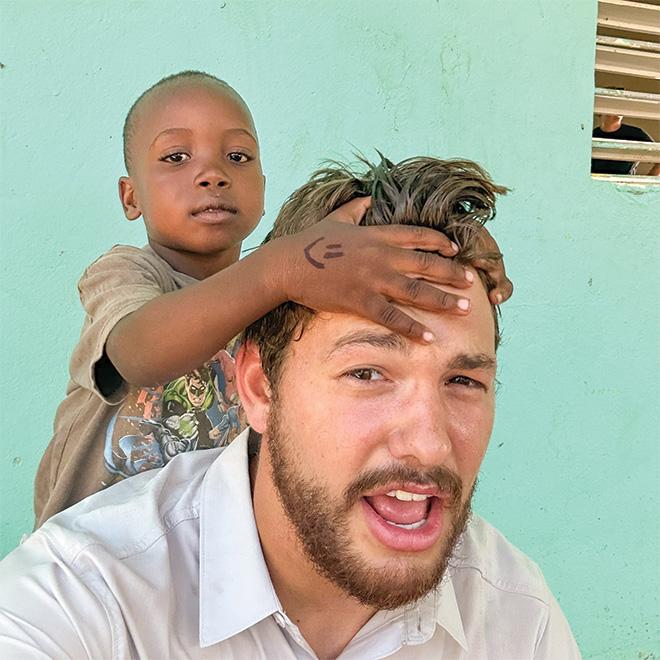
“There was a man in a village who had been paralyzed during the Rwandan genocide. I sat with him for hours, talking about cows. I just needed to be present — and I could feel Christ moving through our interaction. I want to strive for that in every patient I meet.”
The road won’t be easy, but Regli recommits to the journey with a morning ritual borrowed from his time at the University of Mary.
“I wake up and say, ‘Glory to God; this day is for You. I am Your humble servant. I’ve come to do Your will,’” Regli says. “I know that we won’t be living the standard, suburban, American life. There will be many challenges and sacrifices along the way, but we know immeasurable good will come from them.”
Explore Topics
