

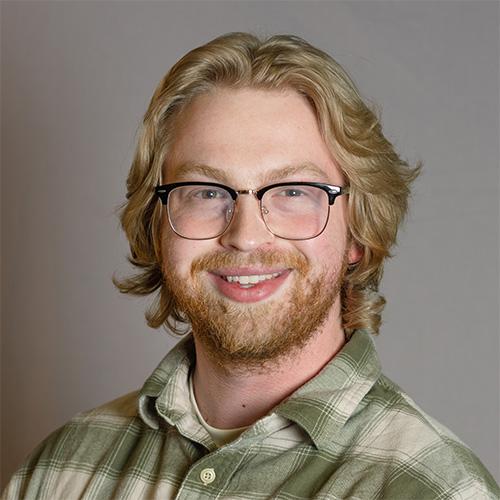
Trevor Winger, MS
About Me
My first undergraduate degree was in philosophy (Honors), and I later earned additional baccalaureate degrees in linguistics, computer science, and cognitive science. My interest in computer science began during my freshman year, after taking a formal logic course (part of philosophy) in which I performed unusually well. The professor (also my advisor) encouraged me to take computer science courses as a result (I imagine he was concerned with me getting a job).
At the time, the field felt open and still forming, with methods in deep learning and gradient-boosted models actively emerging rather than being fully established. Compared with more mature scientific disciplines, CS was perceived as having more room for foundational contributions. In grad school, I was particularly at the intersection of computation and applied domains (health care, finance, etc.), which motivated me to pursue these as areas of time-series research. Most of my work has been in applying ML in clinical settings; perhaps, if I were smarter, I would have done this in finance.
Why I’m At MaryMary has been a very positive experience so far. Coming from larger institutions, the smaller class sizes here allow for a much closer student-professor relationship. That structure makes it easier to engage in discussion-based learning and to approximate something closer to the Socratic method, which I think is increasingly valuable in an era when information itself is easily accessible through tools like LLMs.
Expertise
My research interests center on machine learning and artificial intelligence, with a particular focus on how models represent and reason over complex data. I am especially interested in time-series prediction problems, which have guided much of my prior work in diagnostic and prognostic modeling.
More recently, I have been thinking about how to better identify meaningful research questions directly from model behavior rather than only from predefined clinical hypotheses. One direction I am actively exploring is using model uncertainty and error patterns as signals for clinical insight. Rather than treating prediction error as a limitation, I view it as potential information that can indicate when a patient differs meaningfully from the training population. In these cases, elevated uncertainty or systematic error may reflect increased clinical risk or atypical presentation. I hope to use these signals to identify patients who may benefit from additional triage or clinical attention, and to analyze the underlying statistical and physiological factors driving those errors so they can be communicated clearly to clinicians.
Education
PhDc: University of Minnesota - Minneapolis, MN, Expected 2025
MS: University of Minnesota - Minneapolis, MN, 2022
BS/BA (Philosophy, Linguistics, Cognitive Science, Computer Science): University of Minnesota - Duluth, MN, 2019